
Executive Summary
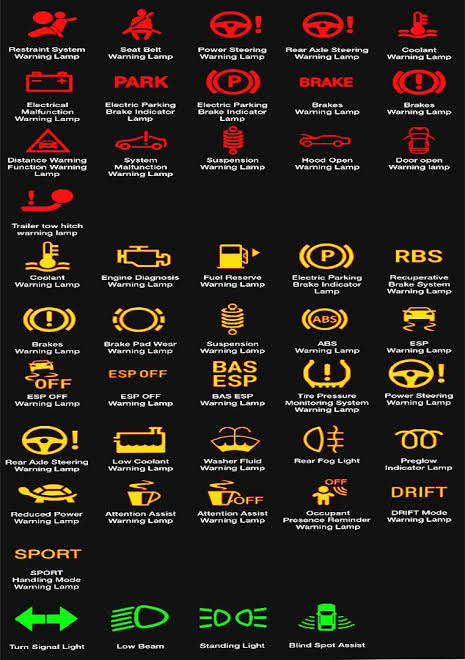
If a warning light you do not recognise has just appeared, read the colour before anything else. Red usually means stop safely as soon as you can. Amber means the car may be driveable but a fault has been logged or a system needs attention soon. Green or blue is information only not a fault warning,it does not prove the car is fault-free. Once you know the colour, the symbol tells you the rest of the dashboard warning lights meaning for your car.
Key Notes
- Red usually means stop safely, switch off and investigate; amber means drive gently only if it is safe and get it checked soon; green or blue is information only.
- The oil-can and thermometer lights are the two that can destroy an engine faster. Treat both as stop-now.
- A steady amber check engine light usually allows a gentle drive to a workshop,a flashing one means stop.
- The red battery light is about the charging system, not automatically about buying a new battery — stop safely and arrange help.
- An airbag/SRS warning is commonly red and means the restraint may not deploy,do not treat it as a routine amber warning.
- On any car you are buying, watch the self-test at ignition — a bulb that never lights is a warning in itself.
Dashboard Warning Lights Meaning: Colour First, Symbol Second
Colour conventions are close to universal across car makers, even though the exact drawings and the systems covered vary by make, model and year. A symbol you learn on one brand will usually mean something similar on another.
Colour What it means What to do Red Stop-level warning: damage may be happening or a safety system is affected Pull off the road safely, switch off, investigate or call for help Amber Caution: a system needs attention or may already be degraded Drive gently only if the car feels safe, and get it checked soon Green or blue Information only: not a fault warning, and not proof the car is fault-free No action for that indicator; keep watching for red or amber warnings
When you switch on the ignition, most cars run a self-test: a group of lights glows for a second or two and then goes out. That is normal. What matters is which lights stay on after the engine starts and whether a light that should appear at start-up never comes on at all.
Red Lights: Stop Safely And Switch Off
Oil Pressure (the oil-can symbol)
This light means low oil pressure, which is not the same thing as low oil level. It can point to a low level, a weak or failing pump, a blocked pickup, a leaking sensor or a wiring fault. Pressure loss can ruin an engine in a very short time, so treat it as a stop-now light beause it can turn joy into mourning.
Pull over safely, switch off and let the car settle for a few minutes. Then check the level on the dipstick and top up if it is low. If the level is correct and the light stays on, do not drive it — arrange recovery or a mechanic.
Engine Temperature (Thermometer Over Wavy Lines)
This one means the engine is overheating or the coolant is low, and overheating can warp a cylinder head and turn a small repair into a very expensive one. Stop safely and switch off.
Let everything cool completely before you touch anything. Never open a radiator or coolant cap while the engine is hot because pressurised hot coolant can cause serious burns and never pour cold water into a hot engine. A temperature gauge climbing into the red is giving you the same message as the light.
Battery Or Charging (Battery Symbol)
This usually means the charging system is not working — the alternator, drive belt, wiring or the battery itself — rather than telling you to buy a new battery. A red charging warning can mean the alternator has failed,the car may stall once the battery’s remaining current is used up.
Pull over safely and switch off,you may check only safe visible items such as the accessory drive belt and obvious battery-terminal condition; do not touch hot or moving parts. Then arrange recovery or a qualified mechanic. Do not continue a long drive on the battery light.
Brake Warning (A Circle With An Exclamation Mark Or The Word BRAKE)
It may simply be the handbrake left on,but it can also mean low brake fluid or a fault in the braking or ABS system. If it stays on after you release the handbrake, treat it as a stop-level fault and hand the car to a qualified mechanic. Do not “test it and see” on a main road.
Airbag/SRS (A Person With A Seatbelt Or The Letters SRS)
This is commonly a red warning, not a routine amber “drive cautiously” light. It means the restraint system may not deploy correctly in a crash, so do not ignore it or assume the car is safe because it still drives normally.
Pull over safely when you can, switch off, and arrange inspection by a qualified auto technicians. Do not rely on the airbag until the fault has been properly checked. If the warning appears after an impact or alongside other red lights, arrange recovery rather than continuing a normal journey.
Amber Lights: Drive Gently And Get It Checked
Check engine light (the engine-shaped symbol)
This shows the engine management system has logged a fault. Causes range from something trivial, such as a loose fuel cap or a sensor glitch, to a misfire, a fuelling problem or an emissions fault.
A steady amber light usually means you can drive gently to a workshop and have it scanned soon, provided the car feels and sounds normal. A flashing amber light, or one that turns red, often signals a misfire that can damage the catalytic converter — reduce load, pull over safely and switch off.
A scan reads stored fault codes through the diagnostic port, typically under the dash on the driver’s side. Codes point to a circuit or a system rather than always to the exact failed part, so good diagnosis still needs a competent technician. It also varies by workshop what a scan costs, so confirm the current figure before work starts.
Clearing the code is not a repair. If the fault is still there, the light comes back.
Other amber lights worth knowing
- Tyre pressure (tyre cross-section with an exclamation mark): check pressures and look for a slow puncture. If a tyre is visibly low, damaged or the car handles oddly, stop and get help.
- ABS (amber on many cars): the anti-lock function may be reduced,skid control is affected even if normal braking remains. Drive cautiously to a workshop avoiding hard braking and wet roads where possible. If the red brake warning is also on, stop.
- Brake wear (amber on some cars): the brakes may be near their limit. Get them inspected promptly by a qualified mechanic; if the pedal feels soft, braking is uneven or a red brake light appears, stop.
- Transmission: if the car drives and selects gears normally, drive gently to a workshop. If it shudders, slips, refuses to select gears or feels unsafe, stop and arrange recovery.
- Power steering, glow plug, diesel particulate filter or AdBlue on some models: usually “get it seen to”, and some systems give limited remaining range. If steering feels heavy or unpredictable, stop.
- Washer fluid, coolant level, door ajar, seatbelt: self-explanatory, but check the coolant level only when the engine is cold.
Mistakesh That Turn A Small Fault Into a Catastrophe
- Ignoring an amber light until it turns red or until the car stops.
- Disconnecting the battery to clear a light, then assuming the fault is gone.
- Opening a coolant cap on a hot engine or topping up a hot engine with cold water.
- Treating the red battery light as an automatic instruction to replace the battery, or as permission for a long drive.
- Continuing to drive because the oil light “went off” — pressure faults can be intermittent.
- Ending a roadside diagnosis with a code cleared and nothing repaired.
Buying or selling a car: Make The Lights Prove Themselves
Used-car history in Nigeria is often incomplete, so buyers should insist on seeing the self-test at ignition. Every warning bulb should light briefly and then go out. A bulb that never appears may be dead or removed to hide a fault,clusters can be swapped between cars.
A proper pre-purchase inspection covers the cluster and a diagnostic scan, not just panels and paint, and it is worth checking the VIN before money changes hands. Cars brought in from abroad deserve a scan soon after arrival, since faults can develop in storage or shipping. If you are selling, fix the fault rather than masking the light: masking is a trust problem, and while a scan can reveal stored codes, physical bulb and cluster checks are also needed.
CNG and LPG conversions are increasingly common,fuel system or electrical faults on a converted car need a specialist rather than a general roadside fix.
Most warning lights are conversation,not a catastrophe if you read the colour, stop when it is red and get amber faults checked promptly. Follow basic roadside safety tips, keep your owner’s manual in the car and let a qualified mechanic handle anything involving brakes, steering, airbags, fuel systems, high-voltage parts or work under a raised car.
Frequently asked questions
Can I Drive Home With An Amber Warning Light On?
Not automatically,it depends on the symbol and how the car behaves. Amber often means “check soon” and a steady check-engine light on a car that feels normal may allow a gentle drive to a workshop.Amber can also signal an active problem with ABS, tyre pressure, transmission, brake wear or another safety-related system. If braking, steering, tyre pressure or gear selection is affected, or the car feels unsafe, stop somewhere safe and arrange help. Airbag/SRS warnings are commonly red, not amber, and mean the restraint may not deploy; treat that as a serious safety fault.
My Warning Light Came On And Then Went Off By Itself. Is It Fixed?
Not necessarily. Many faults are intermittent and the cause can still be there after the light clears. A scan may reveal stored codes on systems that keep them,not every fault leaves a code,so describe when it happened and have the car checked properly, especially if it has happened more than once.
Does Clearing The Fault Code Fix The Problem?
No. Clearing a code only switches off the light; if the underlying fault is still there, it will return. A proper repair means finding the cause first, then clearing the code afterwards.
Why Do All The Lights Glow When I Turn The key?
That is the self-test and it is normal. Most cars briefly light up the cluster so you can see the bulbs work, then the lights go out once the engine starts. A light that never appears at start-up may have a dead or removed bulb, so have the cluster checked physically.
How much does a diagnostic scan cost?
It varies with the workshop, the car and the depth of the diagnosis, so confirm the current figure with the workshop before work begins. Ask whether the price covers reading codes only or it includes testing of the circuit.
This guide is general information from the DealCentral Editorial Team, prepared with the help of AI tools and checked against our editorial and safety rules. It is not professional, legal or financial advice. Anything to do with brakes, steering, airbags, fuel or gas systems or high-voltage parts should be checked and repaired by a qualified mechanic. Prices, fees and rules change: confirm current requirements with the relevant official body.
0 Comments
Post Comment